
Naming & Brand Strategy
What Makes a Domain Name Brandable?
A brandable domain is easy to say, easy to remember, and flexible enough to grow with the business. Here is how to recognise one before you commit.
July 18, 2026 -
8 min read
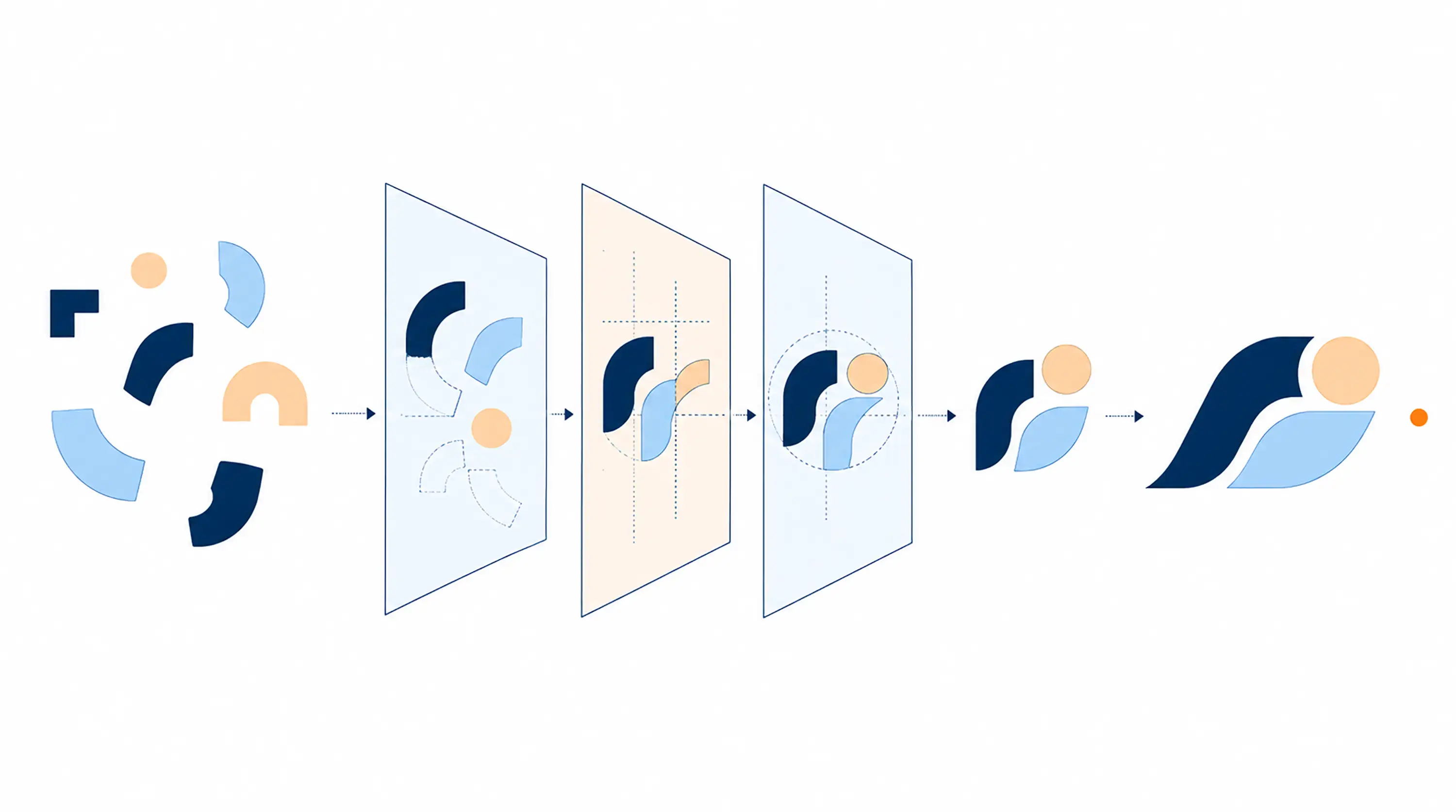
A brandable domain is more than an available web address.
It is a name people can remember, pronounce, and connect with a particular business. It should work in conversation, look credible on a screen, and remain useful as the company grows.
Some domains describe exactly what a business does. Others use familiar words, invented terms, or combinations that suggest an idea without explaining it literally.
Any of these approaches can work.
What matters is whether the name gives the business a clear and distinctive identity.
A strong brandable domain usually balances several qualities:
- clarity;
- memorability;
- ease of pronunciation;
- distinctive character;
- commercial relevance;
- flexibility;
- credible digital use.
No name will perform perfectly in every area. The goal is to find one with enough strengths and no major weaknesses.
Here is how to evaluate that balance.
A brandable domain is easy to say
A name should work naturally in spoken conversation.
People may hear it in a meeting, recommendation, podcast, video, or telephone call before they ever see it written down. If they cannot understand or repeat it, the name creates friction before the brand has a chance to explain itself.
This does not mean every name must use a common dictionary word. Invented names can also be easy to pronounce when their sounds follow familiar patterns.
A pronounceable name usually has:
- a clear sequence of sounds;
- no awkward letter combinations;
- no uncertainty about where one word ends and another begins;
- a rhythm that feels natural when spoken.
Say the name aloud several times.
Then place it in realistic sentences:
“Have you tried ______?”
“You can find us at ______ dot com.”
“We use ______ to manage our work.”
If the name feels difficult to introduce, recommend, or repeat, that difficulty will not disappear after the logo is designed.
It is easy to spell after hearing it
Pronunciation and spelling are closely connected.
A person may understand the sound of a name but still struggle to type it correctly. This often happens when a name contains silent letters, unexpected substitutions, repeated characters, or several possible spellings.
For example, replacing a familiar letter with another may make a name look distinctive. It may also force the business to explain the spelling every time the name is mentioned.
That trade-off is sometimes acceptable, especially when the altered spelling is intuitive. It becomes a problem when the difference is difficult to remember.
Use a simple test:
- Say the name without showing it.
- Ask another person to write what they heard.
- Compare their version with the actual domain.
One incorrect letter can send a visitor to the wrong website, create email errors, or make the brand harder to find.
The best spelling is not always the most conventional. It is the one your audience can understand and retain without unnecessary effort.
It is memorable without being complicated
Memorability is not the same as originality.
A name can be unusual and still forgettable. It can also be built from familiar words and remain highly distinctive.
People tend to remember names that give them something clear to hold on to. That may come from:
- a recognisable word;
- a strong sound;
- a simple rhythm;
- an unexpected combination;
- a useful association;
- a short and balanced structure.
Complexity usually works against memorability.
Long names require more attention. Unnecessary words weaken the main idea. Numbers and hyphens introduce details that people may forget or place incorrectly.
A strong name removes what it does not need.
Ask someone to recall the name an hour after hearing it. If they remember the general idea but not the exact expression, the name may not be distinctive enough.
The objective is not merely to be noticed. It is to be remembered accurately.
It feels distinctive within its market
A name should not disappear into the language of its category.
Many industries develop predictable naming patterns. Technology companies may use similar endings. Financial brands may repeat the same words about trust, capital, or payments. Wellness brands often rely on familiar expressions connected with balance, vitality, or care.
These patterns can make a new name feel appropriate. They can also make it difficult to distinguish from competitors.
A brandable domain should signal enough relevance to feel credible while keeping enough distance to feel ownable.
Compare the name with:
- direct competitors;
- adjacent businesses;
- leading brands in the category;
- commonly used industry terms;
- existing domains with similar spelling or sound.
If several companies could use the same name without changing its meaning, it may be too generic.
Distinctiveness does not require shock or novelty. It requires a name that creates a specific mental reference.
The reader should be able to think:
“That name belongs to that business.”
It gives the business room to grow
A name that fits the first product may not fit the future company.
Founders often begin with a narrow offer. Over time, they add services, enter new markets, or serve different customers. A highly specific name can become restrictive when the business evolves.
Consider whether the domain is attached to:
- one feature;
- one product format;
- one geographic area;
- one audience;
- one technology;
- one temporary trend.
This does not mean descriptive names are always a mistake. They can work well when the company intends to remain focused within a stable category.
The risk appears when the name describes a limitation rather than the broader value of the business.
Ask:
- Would the name still fit if the product changed?
- Could it support a second service?
- Would it remain credible in another market?
- Does it describe the current version or the larger idea?
You do not need a name so broad that it loses all meaning. You need one with enough space to support realistic growth.
It works as a practical digital asset
A name may sound strong and still perform poorly as a domain.
The domain itself should be assessed as part of the brand, not as a technical detail added at the end.
A practical domain should look clean in:
- a browser;
- an email address;
- a search result;
- a social profile;
- a presentation;
- advertising;
- printed material.
Long expressions can become awkward. Hyphens may be omitted. Numbers can be written as digits or words. Unusual spellings can create mistakes.
The extension also affects perception.
A .com remains familiar to broad international audiences and can provide a clear, recognisable digital address. Other extensions may suit a particular market, sector, or product strategy, but they should be evaluated deliberately.
Review the full domain, not only the word before the extension.
Ask:
- Is it easy to read without capital letters?
- Can it be spoken without explanation?
- Does it look credible in an email address?
- Are there accidental words when the letters run together?
- Could users confuse it with another domain?
- Is the extension suitable for the audience?
A strong name and a weak domain configuration can create the same problems as a weak name.
Shorter often helps, but length is not everything
Short domains are attractive because they are usually easier to display, type, and remember.
However, short does not automatically mean brandable.
A five-letter name with an awkward sound may be weaker than a longer name that is clear and distinctive. A short collection of letters may also feel random, difficult to pronounce, or unrelated to the intended audience.
Length should support the name, not define its quality.
A slightly longer domain can still work well when it has:
- familiar words;
- a clear rhythm;
- intuitive spelling;
- strong meaning;
- no unnecessary components.
Instead of asking only, “Is it short?”, ask:
“Does every part of the name earn its place?”
Removing a word is useful when it improves the name. It is not useful when it removes clarity or identity.
It supports the right brand position
A name creates expectations before the customer knows the company.
Sound, structure, meaning, and familiarity can make a name feel:
- technical;
- playful;
- premium;
- accessible;
- serious;
- energetic;
- traditional;
- global.
The right impression depends on the audience and the offer.
A playful name may work for a consumer app but feel inappropriate for a financial service. A formal descriptive name may create trust in one market and feel dated in another.
Evaluate the domain against the intended position:
- Who needs to trust this name?
- What should they feel when they first hear it?
- Does it sound suitable for the price level?
- Does it fit the culture of the market?
- Would it work in another language or country?
- Does it feel too close to a current trend?
A brandable name should not only be memorable. It should be memorable in the right way.
It can be used consistently across the brand
A domain rarely exists alone.
The same name may appear in a company registration, product interface, social profile, email address, packaging, advertising, and sales conversation.
Consistency across these environments makes the brand easier to recognise.
Before choosing the domain, check whether the name can be used in a reasonably consistent form across the main channels that matter to the business.
Social media handles do not always need to match the domain exactly. A clean modifier can be acceptable when the main name remains visible.
However, frequent changes, added words, and inconsistent spellings can weaken recognition.
The objective is not perfect availability everywhere. It is a coherent naming system that people can understand.
A brandable domain is not automatically a safe name
Domain availability and trademark availability are different questions.
Buying a domain gives you control of that web address. It does not automatically give you the right to use the same expression as a brand in every market or category.
Before making a significant commitment, review:
- existing businesses with similar names;
- active domains with similar spelling;
- relevant trademark databases;
- similar sounds and visual forms;
- the countries and product categories in which you plan to operate.
A preliminary search can identify obvious concerns. It cannot replace a professional legal assessment when the risk or investment is significant.
This step should happen before the business commits heavily to design, development, packaging, or marketing.
A memorable name is valuable only when the company can use it with reasonable confidence.
Use a practical brandability test
When comparing several domains, score each one against the same criteria.
- PronunciationCan most people say it correctly at first sight?
- SpellingCan they type it after hearing it?
- MemorabilityWill they remember the exact name later?
- DistinctivenessDoes it stand apart from competitors?
- RelevanceDoes it feel appropriate for the audience and offer?
- FlexibilityCan it support future products or markets?
- Domain qualityDoes the full domain look clear and credible?
- Brand consistencyCan the name work across the main brand environments?
- Naming riskHave similar brands and relevant trademarks been reviewed?
Do not expect every name to receive the highest score in every area.
The best option is often the name with the strongest overall balance and the fewest serious weaknesses.
A highly distinctive name may require more explanation. A descriptive name may offer clarity but less flexibility. A short name may be memorable but harder to spell.
The purpose of the test is to make those trade-offs visible.
The best domain is one the business can build on
A brandable domain does not need to explain everything.
It needs to give the business a clear, credible, and memorable identity.
The company will add meaning through its products, visual identity, communication, and customer experience. The domain provides the foundation on which those associations can develop.
When evaluating a name, do not ask only whether you like it.
Ask whether people can:
- say it;
- spell it;
- remember it;
- recognise it;
- trust it;
- use it;
- grow with it.
The strongest domain is not necessarily the cleverest or the shortest.
It is the one that creates enough distinction without creating unnecessary friction.

COMPANY
LEGAL
© 2026 ItsDomain.com